Water-jet-kerf-erosion-monitoring

Precision in a sink cutout requires strict adherence to kerf width tolerances. The data that rancho cucamonga countertop installation ansley designs maintains indicates that water jet erosion impacts every slab processed in Rancho Cucamonga, CA. A widening kerf alters the final dimensions of a countertop, often leading to a gap where a seam should meet a tight tolerance. This mechanical drift occurs as the abrasive garnet wears down or the nozzle geometry shifts during a long run. Measuring the width of the cut path allows for real time compensation before the error exceeds the limits of the template.
Kerf Erosion and Tool Wear
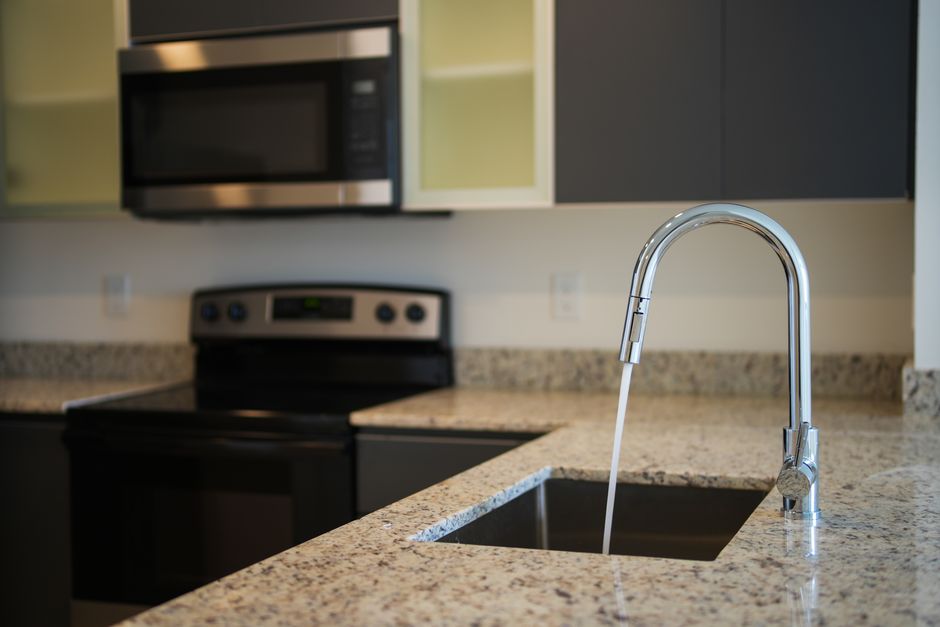
The abrasive stream creates a tapered path rather than a perfectly vertical cut. This taper is a direct result of the kinetic energy dissipating as the jet travels through thick granite or quartz. As the nozzle orifice undergoes micro wear, the jet diameter increases. A measurement of the kerf at the entry point versus the exit point reveals the degree of erosion. If the exit width exceeds the programmed path by more than a fraction of a millimeter, the tool requires immediate inspection. This is common during complex paths used for a waterfall edge or a deep undermount sink cutout.
Monitoring Dimensional Accuracy

A digital template provides the initial geometry, but the physical cut depends on the pressure stability. High pressure fluctuations change the kerf width instantly. When cutting quartzite or marble, the density of the material influences how much the jet deflects. Using a physical gauge to check the kerf width on a scrap piece of the same slab provides the most accurate calibration. If the gauge shows an expanded path, the programmed offset must be adjusted to ensure the edge profile remains within spec. This prevents a mismatch during the final assembly of the stone.
Managing Material Tolerances
Large scale fabrication involves managing how the jet interacts with the slab edges. A wide kerf creates an oversized cutout, which complicates the fit of a sink or a cooktop. This error is especially visible in porcelain or solid surface materials where the material thickness is constant. If the cut path widens, the structural integrity of the thin strips near a seam might fail. Regular checks of the nozzle and the garnet flow rate maintain the accuracy of the digital template throughout the entire fabrication cycle.
Final Assembly and Seam Integrity
The final fit of a seam depends entirely on the precision of the initial water jet paths. An oversized kerf makes it impossible to achieve a tight join between two pieces of stone. This is true for any material from butcher block to granite. If the kerf is too wide, the epoxy or resin used in the seam will be too thick, creating a visible line. Consistent monitoring of the jet erosion ensures that every edge and every joint meets the mechanical requirements of the design.